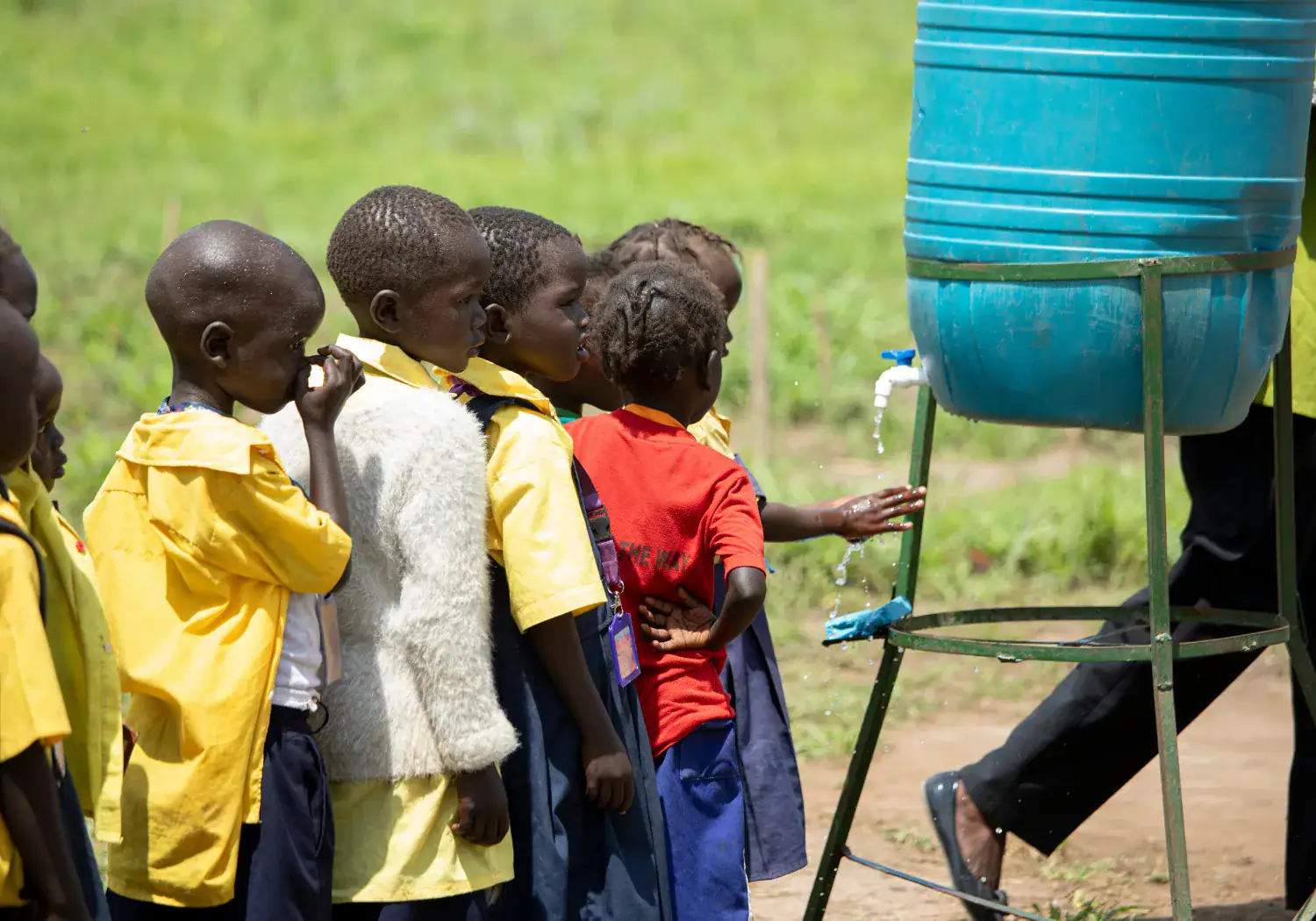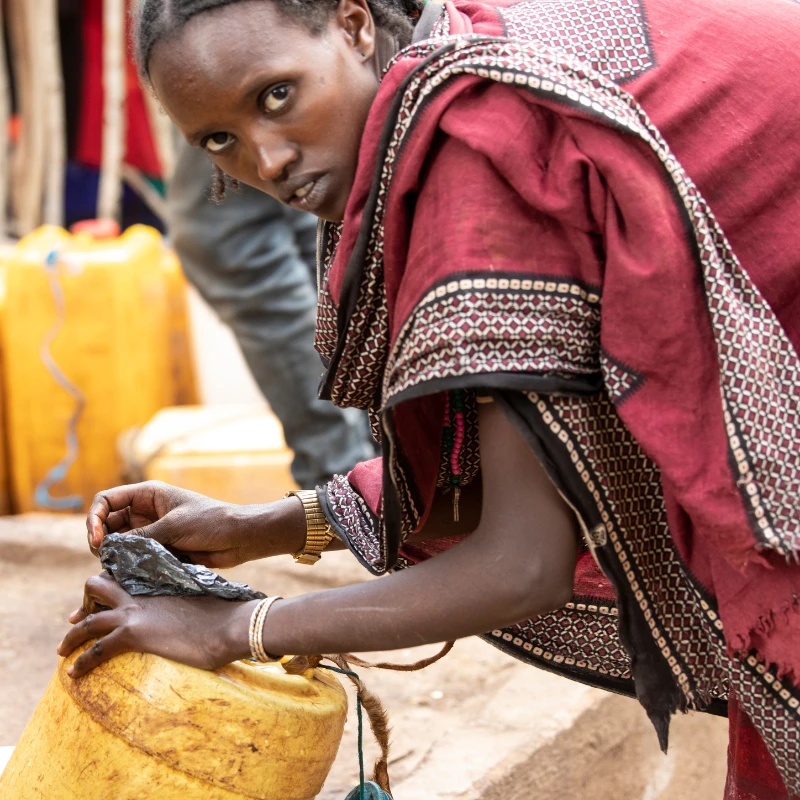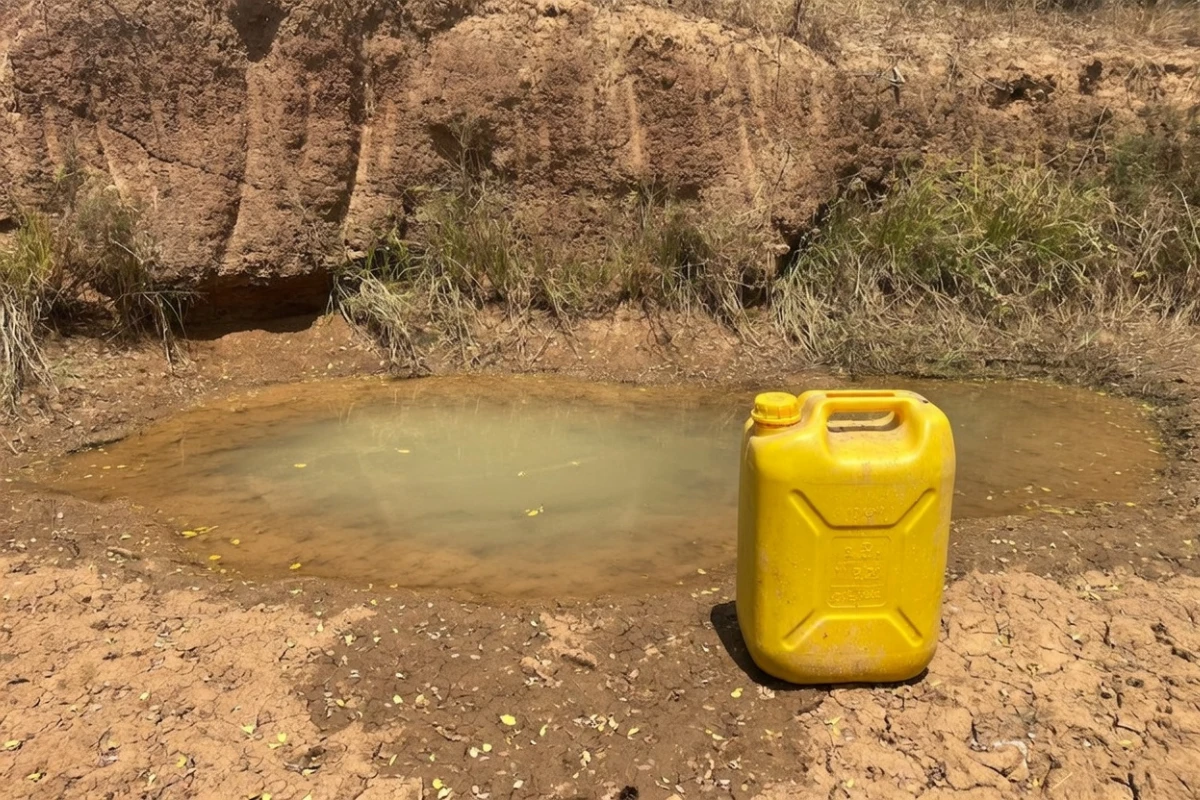
The puddle. This was the only water source for an entire community.
In South Sudan, nearly 60% of the population relies on unsafe water sources (World Bank, “Water Security in South Sudan,” March 2023) — and right now, the country is experiencing its worst and longest cholera outbreak on record.
We saw what that looks like up close, and we haven’t been able to forget it.
We were driving to visit a newly planted church in a remote village when the landscape began to change. The farther we went, the more barren the land became. Before we left, our country leader had suggested we bring bottled water as a gift. Sitting in that vehicle with sweat running down our faces, temperatures well past 100 degrees, we were beginning to understand just how meaningful that gift might be.
A Puddle in the Dirt
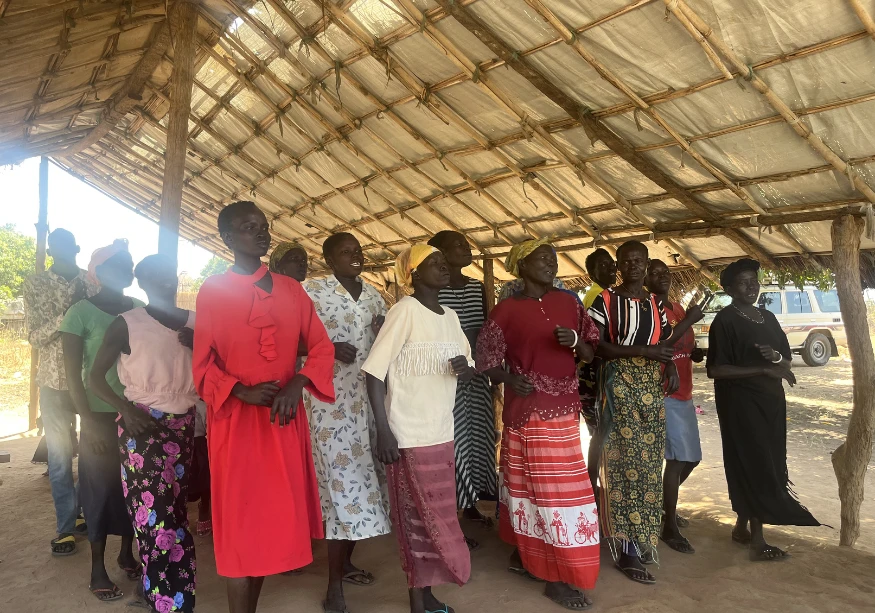
The church that was waiting for us had already gathered, and were already worshipping.
Under a simple tin roof held up by wooden poles, men, women, and children were waiting for us. They greeted us with generous smiles that felt far larger than their circumstances. We shared a short devotional, though in that moment it felt almost inadequate, and prayed together. Then we handed out the bottles of water we had brought. Even that small gesture felt painfully insufficient, almost insignificant, against the weight of their daily reality.
But, their gratitude needed no translation.
Afterward, I asked a simple question: “Where do you get your everyday water?”
They walked me a few yards from where we had been sitting. There, in the cracked earth, was a shrinking puddle, the fading remnant of rainwater slowly disappearing into the ground. Within weeks, it would be gone entirely. The nearest reliable water source was a three-hour walk away.
No filtration. No treatment. No alternative.
Mothers in that village already knew this water could make their children sick, but they had no other choice. When there is no other option, you choose survival and you pray.
I stood there for a long moment. I didn’t have words. I just looked at it.
Why the Church Is the Answer
What struck me standing at that puddle wasn’t only the need. It was who was already there.
Pastor David had planted a church in this village and had been walking with this community long before we arrived. He knew the puddle. He knew the mothers who drew from it. He knew the children who drank from it. He wasn’t visiting the need, he was living inside it, faithfully, every single day.
That is the nature of indigenous church planting. It doesn’t parachute into a crisis and leave. It takes root. It stays. It becomes trusted over years, not weeks.
And that trust changes everything.
When compassion flows through a local church — led by someone who speaks the heart language, understands the culture, and has no plans to leave — it doesn’t feel like aid. It feels like love. And when people experience that kind of love, the Gospel becomes believable in a way that words alone rarely achieve.
“How can they hear without someone preaching to them?” — Romans 10:14
This is what we witnessed in South Sudan. Not a program delivering a service. A church becoming what God designed it to be, a Community Hub of Hope, where the Good News is proclaimed and lived out together.
Walk with communities like this one → Become a Compassion Lifter
When the Water Came
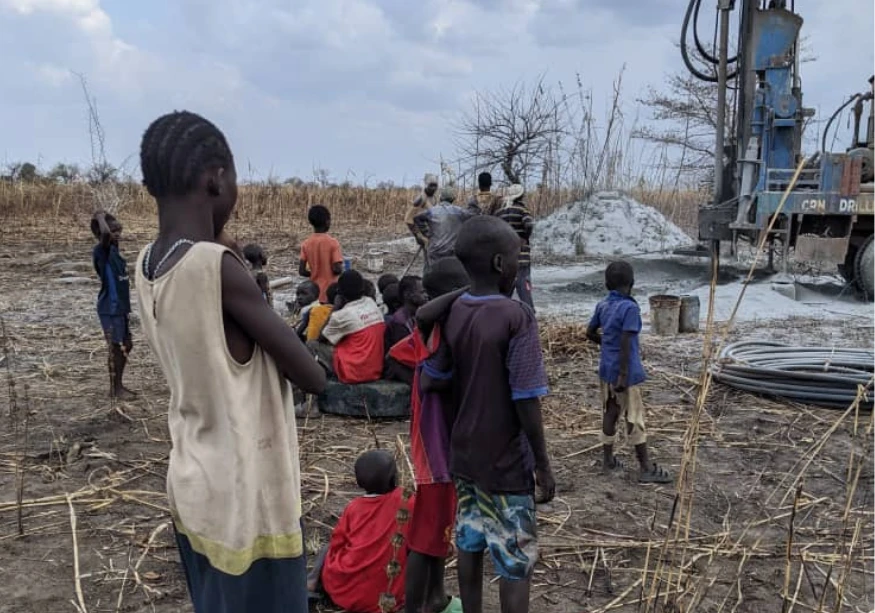
Children gathered to watch the drilling — waiting for something they never had before.
A well was drilled in that village. When the first stream of clean water burst from the ground, the entire community gathered.
There was shouting. Dancing. Laughter. Some people simply stood still with tears running down their faces.
It wasn’t just water. It was relief. It was protection. It was dignity restored.
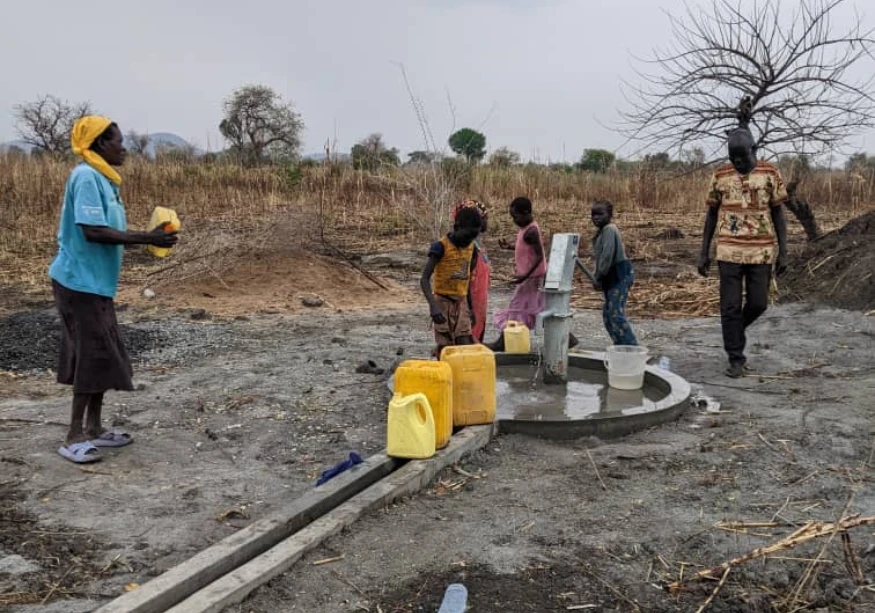
Today, this well serves hundreds of people daily. Clean water. Every morning.
Today, hundreds of men, women, and children draw clean water daily from that well. Children no longer walk for hours under a scorching sun. Mothers no longer choose between thirst and sickness. And in the middle of what the United Nations has described as South Sudan’s worst and longest cholera outbreak on record, with over 80,000 cases and 1,400 deaths since October 2024, that well is not symbolic.
It is life-saving.
But something else has happened alongside the water.
The church has grown deeper roots. People who once kept their distance have begun to draw near, not because water was offered as a condition of faith, but because they witnessed a community that genuinely cared. Trust has grown. Doors have opened. Conversations about Jesus that once felt impossible are now happening naturally.
Compassion made the Gospel believable.
What We Carried Home
We have visited many communities. But the puddle stays with us.
Not as a symbol of despair, but as a picture of what the church, at its best, is called to be. Present in the hardest places. Faithful over time. Carrying both truth and grace into the same hands.
Pastor David and his congregation were already there before the well was drilled. They will be there long after visitors like us have gone home. They are the ones who remain — and that remaining is exactly where transformation takes root.
The church in that village is not just preaching about Living Water.
It is demonstrating it.
How You Can Respond
- Give Clean Water to the Next Village — Partner with indigenous leaders bringing clean water and the Gospel to communities like this one
- Learn about Redemptive Lift — Understand how the Gospel and compassion move together through local churches
- Read More Field Stories — See what God is doing through indigenous leaders across the Global South
- Pray With Us — Join our prayer community for South Sudan and unreached communities worldwide
Petros Network partners with indigenous leaders across East Africa to plant churches that become Community Hubs of Hope — places where the Gospel is shared, compassion is lived out, and communities are renewed from within.