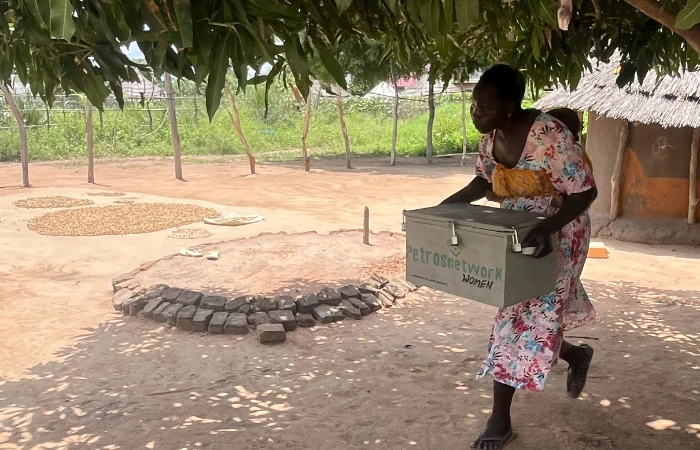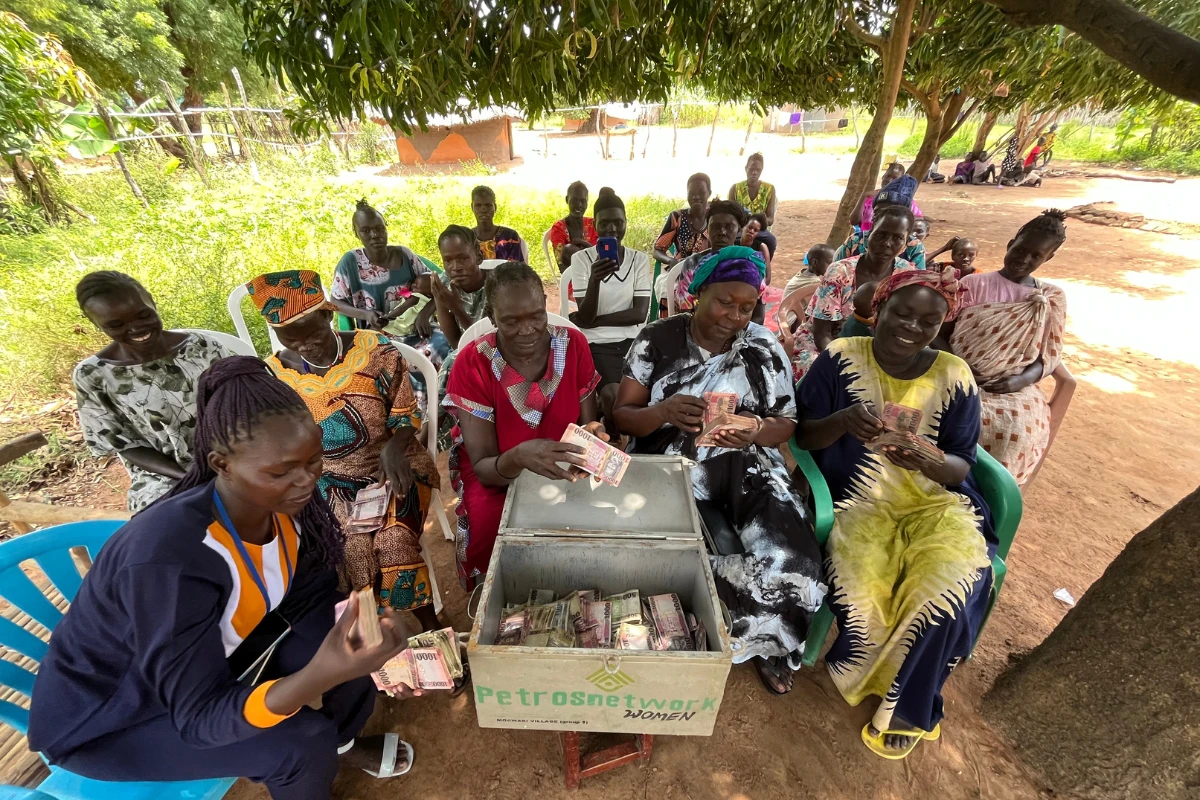
Women of Morwari Village gather for their weekly savings meeting.
Every Wednesday, Rabba walks a mile to gather with a small group of women from her church in Morwari.
They sit together. They pray. They each bring what they can — sometimes just a few dollars — and they record every contribution carefully. Then they do it again the next week. And the week after that.
For most of her life, Rabba never imagined she would be doing something like this. Saving felt out of reach. There was always something more urgent, always another need pulling what little she had away before it could grow into anything.
But something has changed. And it isn’t just the savings.
Small Amounts, Something Significant
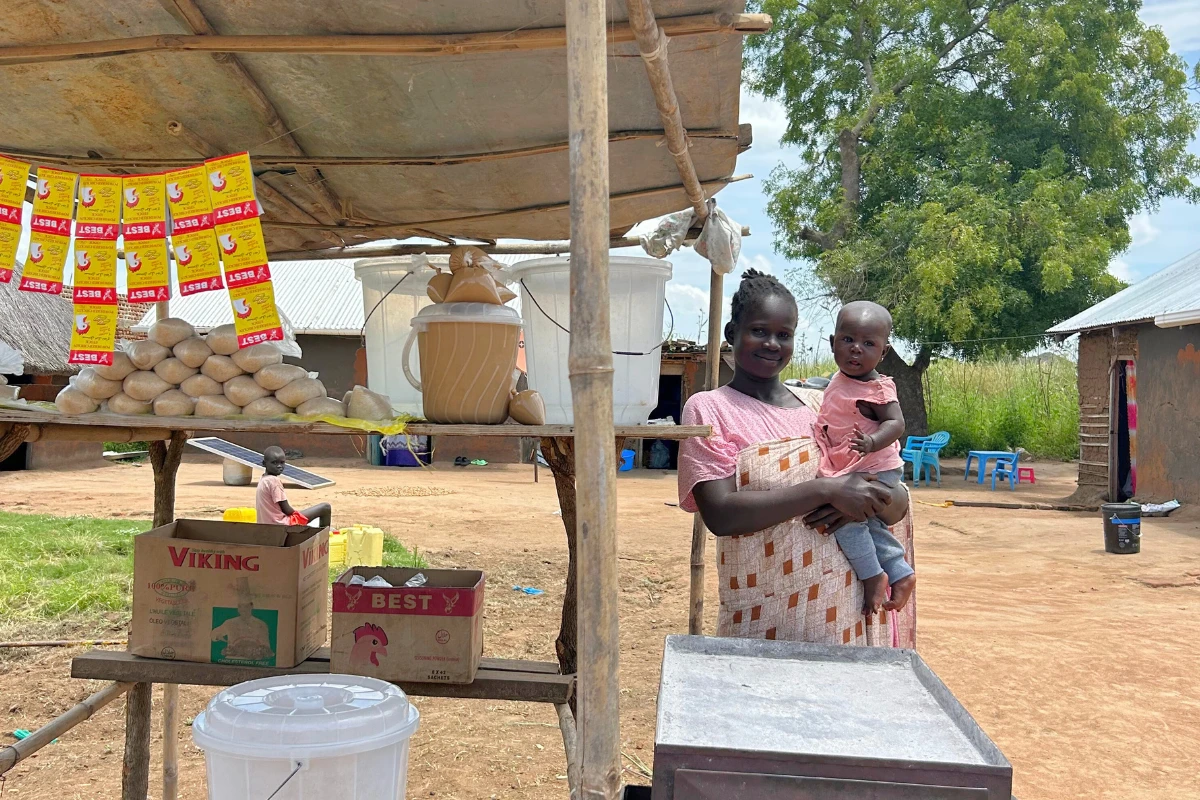
Rabba stands at her bread stand in Morwari, South Sudan, holding her six-month-old baby. Her bread is nearly sold out for the day.
Last year, five women’s savings groups across Torit, South Sudan saved a combined $2,000.
In a country where the average person lives on $1.90 a day, that number is remarkable. These are women navigating real scarcity — fragile households, limited resources, communities where stability is hard-won. The discipline required to show up week after week, contribute consistently, and trust the process is not small.
But what moved us most wasn’t the discipline.
It was what they did next.
As savings grew, the women began asking one another: how can we strengthen our church? Some committed funds to repair the church roof. Others set money aside for chairs and training supplies. Women who had spent years focused on survival began thinking about their community.
When women gain stability, they don’t isolate. They invest.
More Than Money
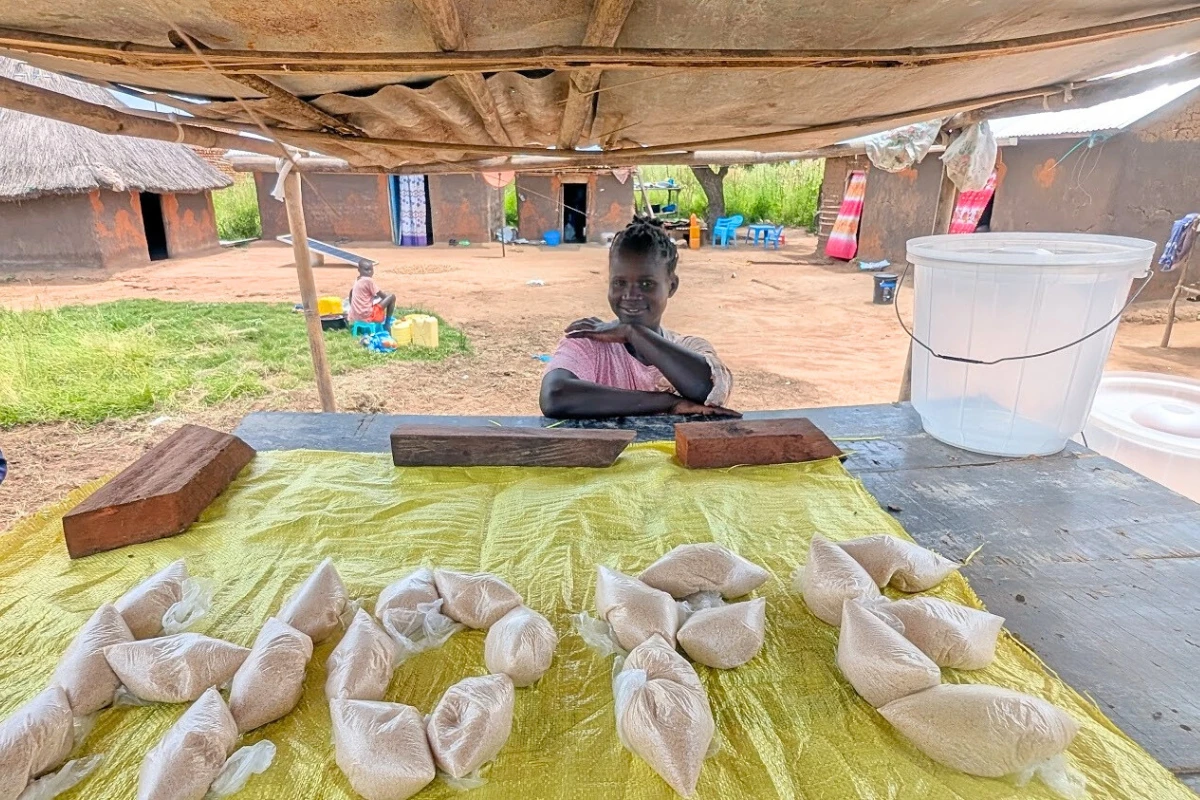
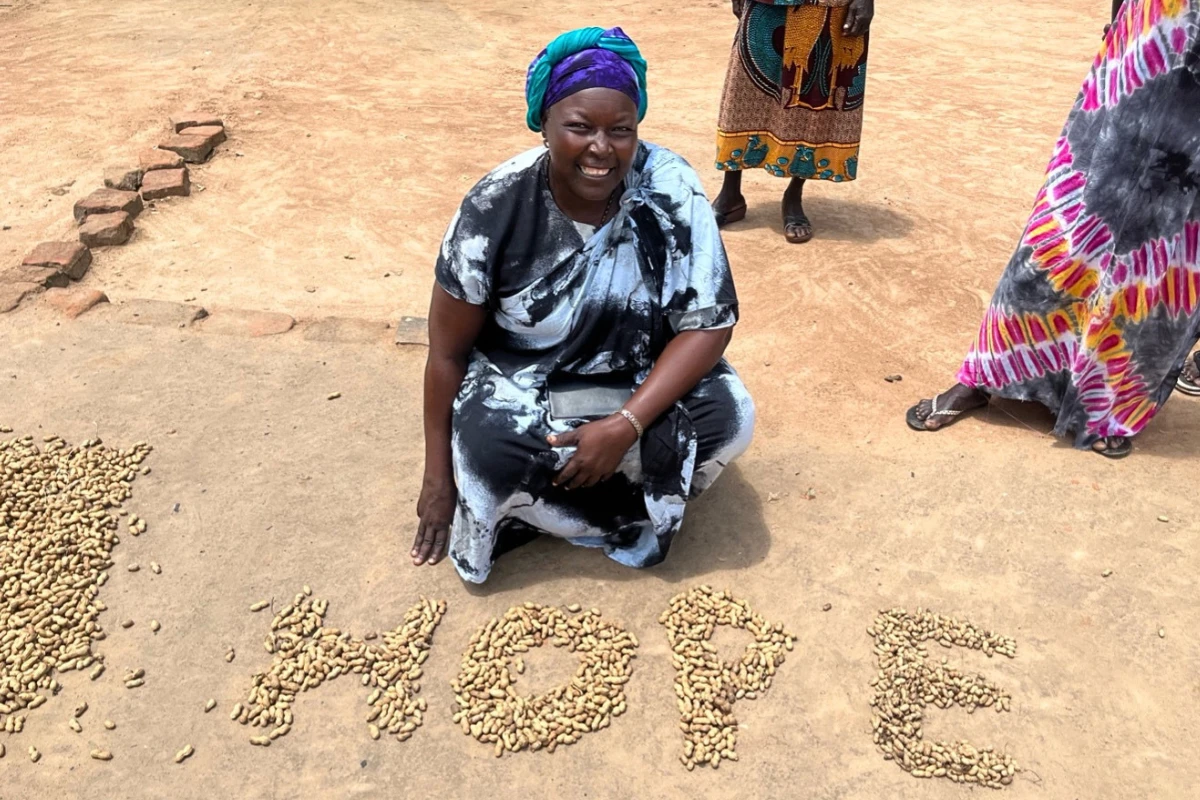
Rabba behind her market table in Morwari, South Sudan — bags of salt arranged in front of her, spelling a single word: HOPE.
Savings groups within Petros Network’s Community Hubs of Hope are not designed as a standalone economic program. They grow out of the local church — and they feed back into it.
Women meet consistently. They pray for each other’s families. They hold one another accountable — financially and in faith. Over time, the group becomes something closer to a discipleship community than a financial meeting.
Sofi, the Women’s Empowerment Director walking alongside Rabba and these groups in South Sudan, described what she has witnessed:
“Above all, this program has brought positive impacts on her life. She can save weekly, paying school fees, and pay her medical bills. Today, she can manage the family with joy — and as she calls herself, ‘a woman of hope,’ by the grace of God.”
The effects move outward from there. When a woman gains even modest financial stability, her household feels it. Children eat more consistently. School fees are paid. Medical emergencies are less devastating. Stress in the home decreases.
And faith — already present — deepens as women begin to see provision take shape in their own hands.
Rabba, who now leads the savings group in Morwari, put it this way:
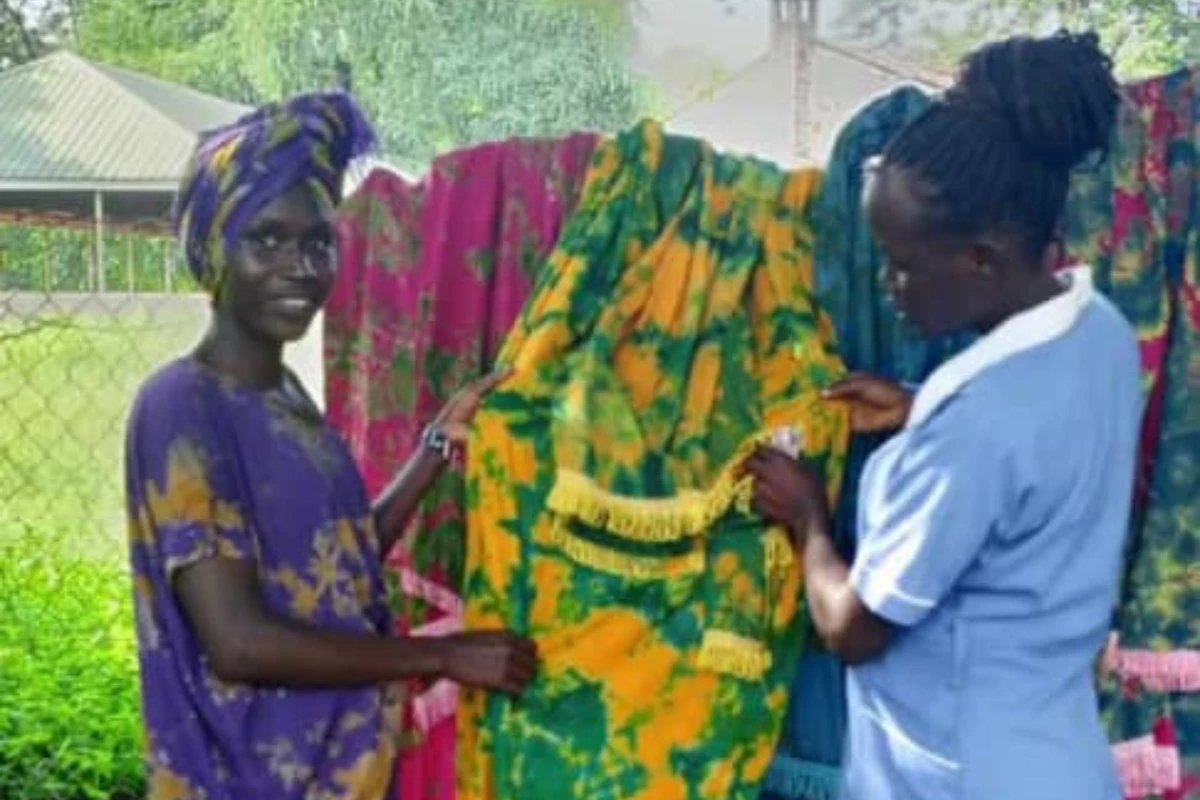
“I can be with my children, bake bread, and tend to my house. It gives me peace knowing they can go to school and I can provide for them. I have a six-month-old baby and I was worried how I was going to manage. But because of the skills I learned and the bread stove I was able to purchase, I can be with my children and make sure they are cared for for many years to come.”
Bread stands are rare in her market. Her business is flourishing. And the word HOPE spelled out in the salt bags on her table feels less like decoration and more like testimony.
What Local Leadership Makes Possible
None of this is being driven from the outside.
The savings groups exist because indigenous church leaders identified the need, understood their communities, and created space for women to gather. Local leaders walk alongside these groups — not managing them, but present with them. That proximity matters.
There is a conviction at the center of how Petros Network works: compassion makes the Gospel believable. When a church shows up not only with a message but with presence — meeting women where they are, walking with them through financial hardship, celebrating alongside them as dignity is restored — the Good News stops being abstract. It becomes tangible. It takes on weight and texture and credibility in the everyday life of a community.
This is what the local church is uniquely positioned to do. Not a program administered from a distance, but a body of people already embedded in the community — already trusted, already known — whose compassion becomes the visible expression of what they proclaim.
This is the pattern Petros Network calls Redemptive Lift — the Gospel and compassion lived out together, inseparable, carried by indigenous leaders who remain long after anyone else would have left.
Looking Ahead
The momentum is growing.
This year, the vision expands to reach 100+ more women like Rabba — building something sustainable and locally rooted. A movement of women trained, mentored, and equipped to lead in their churches and communities for the long term.
Rabba is already thinking about who she will invite next.
She knows what it felt like before she had a group to gather with. She does not want other women in her community to wait any longer to find out what is possible.
Petros Network walks alongside indigenous leaders equipping women through the local church. If you’d like to learn more about women’s empowerment program, click to explore the compassion project.
Walk with women like Rabba — Help reach 100 more women like her →